Renter-Friendly Solutions • 8 min read
No-Drill Storage Mistakes That Make Shelves Fall (Avoid These)
 MyGlowHome Editorial
Introduction
Most no-drill storage failures are not caused by poor products. They happen when systems are used without understanding how they behave under real conditions. Weight, surface quality, humidity, and installation method all matter more than people expect.
The result is predictable: shelves fall, hooks slip, and entire setups fail within weeks. The goal of this guide is to highlight the mistakes that cause these failures so they can be avoided from the start.
If you want to start with the right system in the first place, see which no-drill storage system is right for your rental.
Mistake 1: Treating All Systems as Interchangeable
One of the most common errors is assuming every no-drill solution performs the same way. Adhesive hooks, tension rods, and shelving systems all rely on completely different mechanics.
For example:
- Adhesive systems depend on surface bonding
- Tension systems rely on structural pressure
- Freestanding systems depend on weight balance
Using the wrong system for the wrong task almost always leads to failure. If you're unsure which adhesive hook is appropriate for a specific use case, strongest adhesive hooks for renters breaks down each category and where each one actually works.
Mistake 2: Ignoring Surface Conditions
Even high-quality products fail on poor surfaces. Dust, paint texture, humidity, and uneven walls all reduce effectiveness.
Common overlooked issues:
- Recently painted walls not fully cured
- Dusty or oily surfaces
- High humidity environments like bathrooms
Adhesive systems are especially sensitive to these conditions. Without proper surface preparation, even strong adhesives lose grip over time.
Tile walls behave completely differently from drywall when it comes to adhesive bonding, no-drill storage on tile walls explains what that means for your setup.
Mistake 3: Overloading Light-Duty Systems
Many renters underestimate how quickly weight adds up. A shelf that feels light at installation often becomes overloaded within days.
This is especially common with:
- Adhesive hooks
- Floating shelves
- Command strip systems
Once the load exceeds design limits, failure is gradual rather than immediate, often resulting in sudden drops later.
Overloading is the single most common failure cause, and it almost always comes from trusting the box, how much weight no-drill storage can hold gives you the real-world numbers to use instead.
Mistake 4: Skipping Installation Time Requirements
Some adhesive systems require time to bond properly before being loaded. Skipping this step significantly reduces holding strength.
Typical mistakes include:
- Hanging items immediately after installation
- Applying weight before full curing time
- Ignoring manufacturer-set waiting periods
This is one of the simplest mistakes to avoid, yet one of the most common causes of failure. Even when installation goes well, poor removal technique at move-out can still cost you your deposit, how to remove adhesive hooks without damage covers how to take everything down cleanly.
Mistake 5: Using One System for the Entire Home
No single no-drill solution is designed to handle every storage need in a home. Trying to force one system to do everything leads to poor performance across all areas.
A better approach is system layering:
- Use tension rods for closets and vertical separation
- Use adhesive hooks for light daily-use items
- Use shelving systems for structured storage
To see how this works in practice, explore damage-free wall storage ideas for small apartments.
Mistake 6: Ignoring Movement and Stress
Storage systems are not static in real life. Doors open, humidity changes, and items are frequently added or removed.
Dynamic stress causes:
- Gradual adhesive weakening
- Rod slippage under uneven load
- Shelf tilt over time
Systems must be chosen not just for initial stability, but for long-term behaviour under movement.
Mistake 7: Buying Before Knowing What You Actually Need
Most people pick a product first and figure out the details later. That's usually where the trouble starts you end up with adhesive hooks where you needed a tension rod, or a light-duty strip carrying more than it was ever meant to hold.
Before buying anything, it's worth spending a few minutes matching the system to the job. Load type, surface material, and how permanent you need the setup to be all point toward different solutions. Getting that part right upfront saves you from the mistakes covered in this entire guide.
Practical Takeaway
Most failures come from mismatched expectations rather than product defects. No-drill systems are reliable when used within their intended design limits. Understanding surface conditions, weight distribution, and system type is more important than choosing the “strongest” product available.
Conclusion
No-drill storage works best when treated as a system, not a single solution. Each product has specific strengths and limitations, and failure usually occurs when those limits are ignored.
By avoiding these common mistakes, renters can build stable, flexible storage setups without drilling or permanent modifications. The key is not choosing better products, but using the right system in the right context.
Suggested Posts
 No-Drill vs Mounted Shelves for Renters
A direct comparison of no-drill and traditional mounted shelves weight capacity, surface damage, cost, and when each one makes sense for renters.
 No Drill Storage on Brick and Textured Walls
No drill storage on brick and textured walls why standard adhesive solutions fail and which approaches actually work when your rental walls are not smooth.
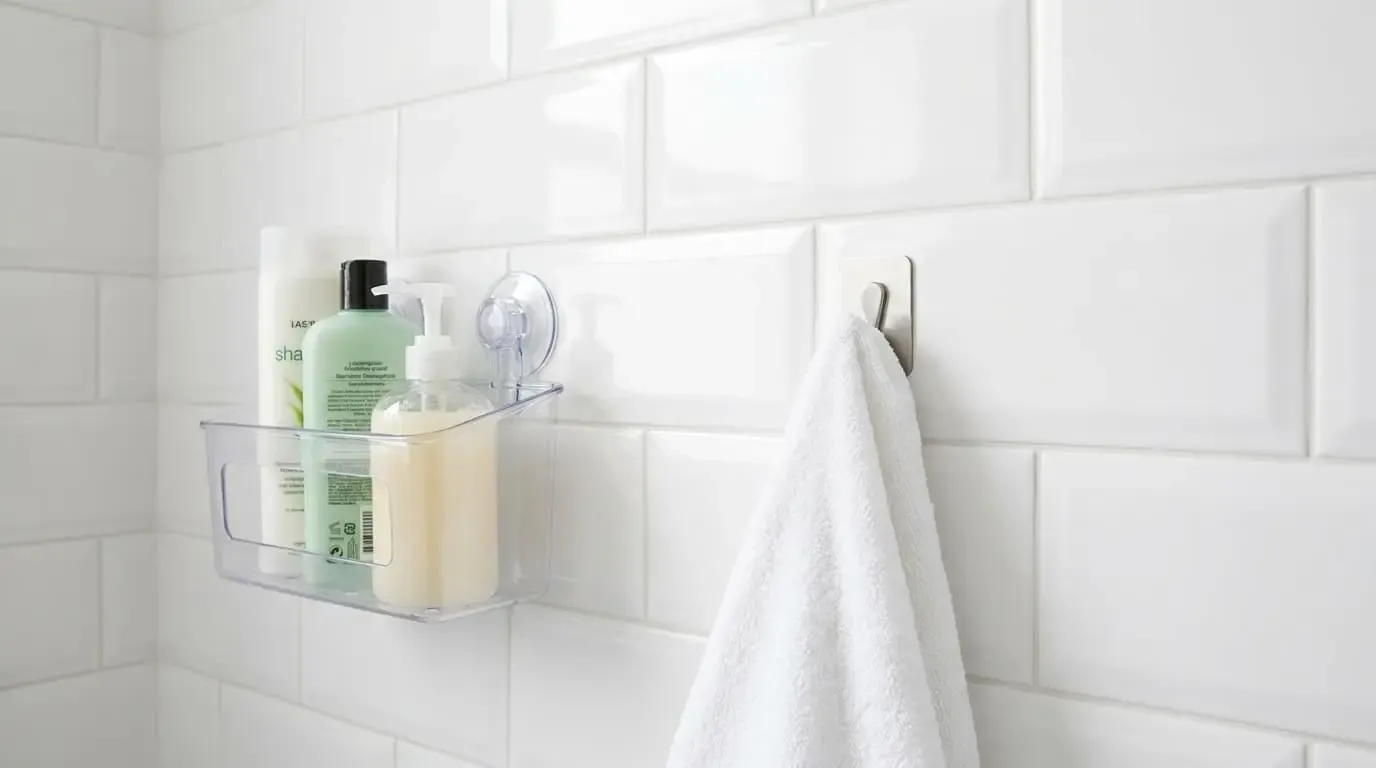 No Drill Storage on Tile Walls and What Actually Works
No drill storage on tile walls what works on glazed tile, what fails on matte and grout, and how to mount things securely without touching a drill.
Comments
No comments yet. Be the first to comment!